Month: March 2026

nikon d5200 user manual

Nikon D5200 User Manual: A Comprehensive Guide

Welcome! This detailed manual unlocks the full potential of your Nikon D5200, offering a complete exploration of its features and functions for optimal photography.

Congratulations on choosing the Nikon D5200, a powerful and versatile Digital Single-Lens Reflex (DSLR) camera designed to elevate your photographic journey. This user manual serves as your comprehensive guide, meticulously crafted to help you understand and effectively utilize every aspect of this remarkable device. Whether you’re a seasoned photographer or just beginning to explore the world of digital imaging, the D5200 offers a blend of advanced technology and user-friendly operation.

This manual will walk you through the camera’s features, from basic setup and shooting modes to advanced customization options. We’ll cover everything from understanding exposure controls and focusing techniques to mastering white balance and image quality settings. Prepare to unlock your creative potential and capture stunning images with the Nikon D5200!

Key Features and Specifications

The Nikon D5200 boasts a 24.2-megapixel DX-format CMOS sensor, delivering exceptional image clarity and detail. It features a 3.0-inch tilting LCD screen for comfortable viewing from various angles, and 1080p Full HD video recording capability at up to 60 frames per second. Its 39-point autofocus system ensures sharp and accurate focus, even on moving subjects.

Connectivity options include built-in Wi-Fi for easy image sharing and remote control via smartphone or tablet. The camera supports ISO sensitivities from 100 to 6400, expandable to 25600, providing excellent low-light performance. It also offers a continuous shooting speed of up to 5 frames per second. The D5200 is compatible with a wide range of NIKKOR lenses, expanding your creative possibilities.

What’s in the Box?

Upon opening your Nikon D5200 package, you’ll find the D5200 digital SLR camera body itself, ready for your photographic adventures. Included is the standard Nikon AF-P DX NIKKOR 18-55mm f/3.5-5.6G VR lens, a versatile option for everyday shooting. You’ll also receive a battery and charger to power your camera, ensuring you’re always ready to capture moments.

Essential accessories are also provided: a USB cable for transferring images to your computer, and an HDMI cable for connecting to a television or monitor. A strap is included for comfortable carrying, and a comprehensive user manual guides you through all the camera’s features. Finally, you’ll find body cap, lens cap, and relevant documentation for registration and warranty information.

Camera Body Overview

The Nikon D5200 boasts a robust and ergonomically designed body, crafted for comfortable handling during extended shooting sessions. Its textured grip provides a secure hold, while the strategically placed buttons and dials offer intuitive control. The camera features a bright 3.0-inch tilting LCD screen, facilitating easy viewing from various angles – perfect for creative compositions.

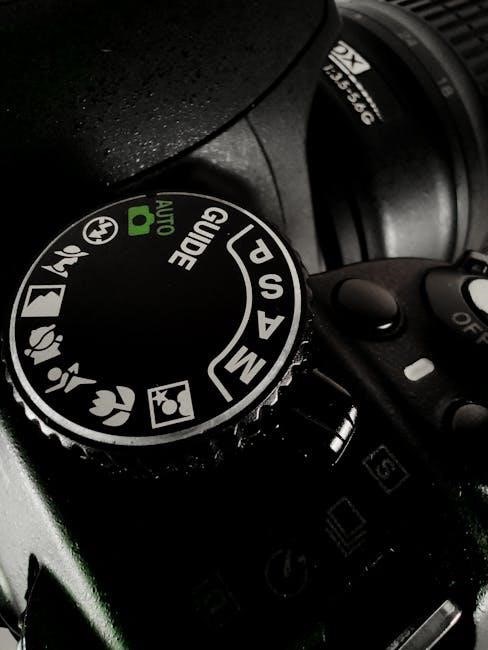
On top, you’ll find the mode dial, shutter button, and control dials for adjusting settings. The rear panel houses the LCD screen, menu buttons, and directional pad for navigating the camera’s functions. The bottom of the camera includes the battery compartment and memory card slot. Familiarizing yourself with these key components will significantly enhance your shooting experience and unlock the D5200’s full potential.

4.1 Front Panel Controls

The Nikon D5200’s front panel primarily houses controls related to lens operation and focusing. You’ll find the lens release button, allowing for quick lens changes. Adjacent to this is the depth-of-field preview button, enabling you to visualize the effect of your chosen aperture on the final image. The autofocus-area mode selector lets you choose between single-point, dynamic-area, and auto-area AF.

Furthermore, the AF-assist beam emitter aids focusing in low-light conditions; The function (Fn) button provides customizable access to frequently used settings. Understanding these controls is crucial for precise focusing and achieving desired depth of field, ultimately enhancing your photographic control and creative expression.

4.2 Rear Panel Controls

The rear panel of the Nikon D5200 is densely populated with controls for navigating menus, reviewing images, and adjusting camera settings. The prominent LCD screen serves as your viewfinder and display for reviewing captured photos and videos. The directional pad with central OK button facilitates menu navigation and setting adjustments. The ‘i’ button grants quick access to frequently used settings.

Dedicated buttons for playback, menu access, and image quality/size are also present. The viewfinder diopter adjustment dial ensures clear viewing for users with varying eyesight. The Live View button activates Live View shooting, while the video record button initiates video recording. Mastering these controls unlocks efficient camera operation and customization.

4;3 Top Panel Controls

The Nikon D5200’s top panel houses essential controls for shooting and camera operation. The mode dial allows quick selection of shooting modes – Auto, Scene, Program, Shutter-priority, Aperture-priority, and Manual. The on/off switch, combined with the shutter button, powers the camera on and initiates image capture. The exposure compensation dial enables adjustments to image brightness.

A dedicated button activates the built-in flash, offering control over flash settings. The ISO button provides direct access to ISO sensitivity adjustments, crucial for low-light photography. The metering mode button allows selection of metering methods for accurate exposure. Understanding these top panel controls is fundamental for efficient and creative photography with the D5200.

4.4 Bottom Panel & Compartments

The Nikon D5200’s bottom panel features the tripod socket, essential for stable long-exposure photography and video recording. A crucial compartment houses the battery, ensuring reliable power for extended shooting sessions. Adjacent to the battery is the memory card slot, compatible with SD cards for storing your photos and videos.

A protective cover safeguards these compartments from dust and moisture. It’s important to use a compatible SD card and ensure the battery is securely inserted. Proper handling of these compartments is vital for maintaining the camera’s functionality and protecting your valuable images. Always exercise caution when accessing these areas to prevent damage.

Setting Up the Camera

Initial setup is key to enjoying your Nikon D5200. Begin by inserting a compatible SD memory card into the designated slot – this is where your photos and videos will be stored. Next, install the battery, ensuring it clicks securely into place. Power on the camera and follow the on-screen prompts to configure essential settings.

These include selecting your preferred language, accurately setting the date and time, and choosing an appropriate shooting mode. Familiarize yourself with the menu system for future customization. Proper initial setup ensures optimal performance and a personalized shooting experience. Take your time and carefully review each step for a smooth start.

5.1 Inserting the Battery and Memory Card

Powering up and storing your images begins with correctly inserting the battery and memory card. Locate the battery compartment door on the bottom of the camera and slide it open. Insert the EN-EL14 battery, ensuring the contacts align, and push it in until it clicks. For the memory card, open the card slot cover (typically on the side) and insert a compatible SD card – SD, SDHC, and SDXC are supported.

Push the card in until it clicks, and close the cover. Always handle the memory card with care, avoiding static electricity. Confirm the battery indicator illuminates when the camera is powered on, and the memory card is recognized in the menu system.

5.2 Initial Camera Setup (Language, Date/Time)

Personalizing your D5200 starts with the initial setup. Upon first powering on, the camera will prompt you to select your preferred language. Use the multi-selector and OK button to navigate and confirm your choice. Next, accurately set the date and time. Correct date/time settings are crucial for proper image and video file organization and metadata.

You can choose to set the date/time manually or enable automatic setting via GPS if a compatible accessory is connected. Confirm your selections and proceed to the next setup step. Accurate initial settings ensure a smooth and personalized user experience from the outset.

5.3 Choosing a Shooting Mode (Auto, Scene, P, S, A, M)

The Nikon D5200 offers a versatile range of shooting modes to suit various skill levels and photographic situations. Auto mode simplifies operation for beginners, letting the camera handle all settings. Scene modes optimize settings for specific scenarios like portraits, landscapes, or sports. For more control, explore P (Program) mode, offering semi-automatic operation.

Advanced users can utilize S (Shutter-Priority) to control motion blur, A (Aperture-Priority) to manage depth of field, and M (Manual) mode for complete creative control over both aperture and shutter speed. Selecting the appropriate mode is fundamental to achieving desired photographic results. Experiment to discover what works best for you!

Understanding Shooting Modes

The Nikon D5200’s shooting modes provide varying levels of control, catering to diverse photographic needs. Auto mode is ideal for effortless point-and-shoot simplicity, perfect for beginners or quick snapshots. Scene modes intelligently adjust settings for specific subjects like landscapes, portraits, or night scenes, optimizing image quality.

P (Program) mode offers a balance, allowing some user control while the camera manages other settings. S (Shutter-Priority) lets you dictate shutter speed, crucial for capturing motion. A (Aperture-Priority) controls depth of field, influencing background blur. Finally, M (Manual) mode grants full creative authority over both shutter speed and aperture, enabling complete customization.

6.1 Auto Mode: Point-and-Shoot Simplicity

Auto mode on the Nikon D5200 is designed for ultimate ease of use, requiring minimal photographic knowledge. The camera automatically selects the optimal settings – aperture, shutter speed, ISO, and white balance – based on the scene it detects. This makes it perfect for casual shooting, everyday moments, or when you need a quick, reliable result without fussing with complex configurations.

Simply compose your shot, half-press the shutter button to focus, and fully press to capture the image. Auto mode excels in well-lit conditions, but also performs admirably in lower light, utilizing built-in flash when necessary. It’s a fantastic starting point for new photographers and a convenient option for experienced users seeking speed and simplicity.

6.2 Scene Modes: Optimizing for Specific Situations

Scene Modes on the Nikon D5200 offer pre-configured settings tailored to common shooting scenarios, enhancing image quality without manual adjustments. These modes include Portrait, Landscape, Sports, Close-up, Night Portrait, and more. Each mode optimizes camera settings like aperture, shutter speed, ISO, and white balance to best suit the selected scene.

For example, Portrait mode blurs the background for a pleasing bokeh effect, while Landscape mode prioritizes sharpness and vibrant colors. Sports mode utilizes faster shutter speeds to freeze action. Utilizing Scene Modes allows you to achieve professional-looking results even without extensive photographic expertise, providing a convenient pathway to better images in diverse conditions.

6.3 P (Program) Mode: Semi-Automatic Control

Program (P) Mode on the Nikon D5200 strikes a balance between automatic convenience and manual control. The camera automatically selects an appropriate aperture and shutter speed combination based on the lighting conditions, but allows the photographer to adjust other settings like ISO, white balance, and exposure compensation.

This mode is ideal for situations where you want some creative control without the complexity of fully manual settings. You can shift the program, effectively altering both aperture and shutter speed simultaneously, to achieve desired effects like motion blur or increased depth of field. P mode offers a stepping stone towards mastering more advanced shooting techniques, providing flexibility and creative freedom.

6.4 S (Shutter-Priority) Mode: Controlling Motion

Shutter-Priority (S) Mode on your Nikon D5200 grants you direct control over the shutter speed, while the camera automatically adjusts the aperture to achieve proper exposure. This mode is exceptionally useful for capturing motion – either freezing it with fast shutter speeds or blurring it to convey a sense of movement.

For sports or wildlife photography, a fast shutter speed (e.g., 1/500s or faster) will freeze action. Conversely, a slower shutter speed (e.g., 1/30s or slower) can create motion blur, perfect for waterfalls or light trails. Remember to consider the impact of shutter speed on image brightness and potential camera shake; a tripod may be necessary for slower speeds.

6.5 A (Aperture-Priority) Mode: Controlling Depth of Field

Aperture-Priority (A) Mode on the Nikon D5200 empowers you to dictate the aperture setting, influencing the depth of field – the area of your image that appears sharp. The camera then automatically selects the appropriate shutter speed for correct exposure. A wider aperture (lower f-number, like f/1.8) creates a shallow depth of field, ideal for portraits with blurred backgrounds, isolating your subject beautifully.

Conversely, a narrower aperture (higher f-number, like f/16) yields a greater depth of field, ensuring sharpness throughout the entire scene, perfect for landscapes. Understanding the relationship between aperture and depth of field is crucial for creative control over your images, allowing you to emphasize specific elements and create visually compelling photographs.

6.6 M (Manual) Mode: Full Control

Manual (M) Mode on your Nikon D5200 grants you complete authority over both aperture and shutter speed, offering the ultimate creative freedom. This mode requires a solid understanding of the exposure triangle – the interplay between aperture, shutter speed, and ISO. You independently set these values to achieve your desired exposure and artistic effect.

Manual mode is invaluable in challenging lighting conditions where automatic modes may struggle, such as low-light scenarios or when shooting with strong backlighting. It allows for precise control over motion blur and depth of field, enabling you to fully realize your photographic vision. Mastering Manual mode unlocks the full potential of your D5200.

Focusing and Autofocus Settings

Achieving sharp images with your Nikon D5200 relies on understanding its focusing capabilities. The camera offers several Autofocus (AF) modes tailored to different shooting scenarios. AF-S (Single) is ideal for stationary subjects, locking focus when the shutter button is half-pressed. AF-C (Continuous) tracks moving subjects, continuously adjusting focus as they move – perfect for sports or wildlife.

AF-A (Auto) intelligently switches between AF-S and AF-C, attempting to determine the best mode automatically. Furthermore, explore Focus Area Modes: Single-Point AF allows precise focus selection, Dynamic-Area AF uses surrounding points to track moving subjects, and Auto-Area AF lets the camera choose the focus point.

7.1 Autofocus Modes (AF-S, AF-C, AF-A)

Nikon D5200’s autofocus system provides three primary modes to suit various shooting conditions. AF-S (Single Autofocus) is best for still subjects; the camera focuses once when you half-press the shutter release, and remains locked until you release or recompose. AF-C (Continuous Autofocus) excels with moving subjects, continuously adjusting focus as they change position – ideal for action photography.

AF-A (Auto Autofocus) attempts to automatically select between AF-S and AF-C, analyzing the scene to determine the most appropriate mode. This is a good starting point for general photography, but mastering AF-S and AF-C provides greater control. Experiment with each mode to understand their strengths and weaknesses for optimal results;

7.2 Focus Area Modes (Single-Point, Dynamic-Area, Auto-Area)

The Nikon D5200 offers several Focus Area Modes, dictating how the autofocus system selects the focus point. Single-Point AF allows you to manually choose a single focus point, providing precise control over where the camera focuses – perfect for static subjects requiring accuracy. Dynamic-Area AF uses a cluster of focus points around your selected point, tracking moving subjects within that area.

Auto-Area AF lets the camera automatically select focus points across the entire frame, suitable for general photography where precise focus point selection isn’t critical. Understanding these modes empowers you to optimize focus for different scenarios, ensuring sharp and well-defined images. Experiment to find what works best for your style!

Exposure Control

Exposure control is fundamental to photography, determining the brightness and overall look of your images. The Nikon D5200 provides comprehensive control over exposure through ISO sensitivity, metering modes, and aperture/shutter speed adjustments. ISO controls the camera’s sensitivity to light; higher ISOs are useful in low light but can introduce noise.

Metering modes – Matrix, Center-Weighted, and Spot – dictate how the camera measures light in the scene. Mastering these settings allows you to achieve properly exposed photos in various lighting conditions, ensuring detail in both highlights and shadows. Experimenting with these controls unlocks creative possibilities and ensures consistently excellent results.

8.1 ISO Sensitivity Settings

ISO sensitivity determines how much the camera’s sensor reacts to light. Lower ISO settings (like 100 or 200) are ideal for bright conditions, producing cleaner images with minimal noise. As light decreases, increasing the ISO (e.g., 800, 1600, or higher) makes the sensor more sensitive, allowing for faster shutter speeds and proper exposure.

However, higher ISOs introduce digital noise, appearing as graininess in your photos. The Nikon D5200 allows ISO settings from 100 to 6400, with a boost option to 25600. Understanding the trade-off between brightness and noise is crucial for achieving optimal image quality in diverse shooting scenarios. Experiment to find the highest usable ISO for your needs.

8.2 Metering Modes (Matrix, Center-Weighted, Spot)

Metering modes dictate how the camera evaluates light to determine the correct exposure. Matrix metering (the default) analyzes the entire scene, providing a balanced exposure suitable for most situations. Center-weighted metering prioritizes the center of the frame, useful when your subject is centrally located and you want to ensure it’s properly exposed.

Spot metering measures light from a very small area, ideal for challenging lighting where you need precise control over exposure, like backlit subjects. Selecting the appropriate mode ensures accurate exposure, preventing underexposed or overexposed images. Experiment with each mode to understand their effects in different scenarios and master your camera’s exposure capabilities.

White Balance

White balance (WB) corrects color casts caused by different lighting conditions, ensuring accurate color reproduction in your photos. The Nikon D5200 offers several preset WB options, including Auto (for general use), Incandescent, Fluorescent, Sunny, Cloudy, and Flash.

Custom WB allows you to manually set the white balance using a white or gray card for ultimate accuracy. Incorrect WB settings can result in images appearing too warm (yellowish) or too cool (bluish). Understanding and utilizing WB settings is crucial for achieving natural-looking colors and enhancing the overall quality of your photographs, especially in varied lighting environments.

Image Quality and Size Settings

Image quality determines the level of compression applied to your photos, impacting file size and detail. The Nikon D5200 offers RAW (uncompressed, maximum detail – ideal for editing), Large, Medium, and Small JPEG options. Image size dictates the resolution, measured in pixels. Higher resolutions (e.g., Large: 6000 x 4000 pixels) are suitable for large prints and cropping, while lower resolutions are sufficient for web use.

Choosing the right settings balances file size and image quality. RAW files offer maximum flexibility but require post-processing. JPEGs are convenient for immediate use but involve some data loss. Consider your intended use when selecting these crucial settings.

Using Live View

Live View on the Nikon D5200 allows you to compose and review images using the rear LCD screen, rather than the optical viewfinder. Activate it by flipping the LCD screen out and selecting ‘Live View’ in the shooting menu, or using the dedicated Live View button. This mode is particularly useful for precise focusing, especially when using a tripod, and for shooting from awkward angles.

In Live View, you can utilize features like focus peaking to visually highlight areas in focus, and histogram display to assess exposure. Be mindful that prolonged Live View use can lead to sensor heating, potentially affecting image quality.

Video Recording

The Nikon D5200 captures Full HD 1080p video at frame rates of 24, 25, or 30 frames per second. Initiate video recording by switching to the ‘Movie’ mode on the mode dial. You can control exposure settings manually or allow the camera to adjust automatically. Remember to insert a compatible SD card with sufficient storage and write speed for video files.

During recording, you can utilize autofocus, but performance may vary. External microphones can be connected via the microphone jack for improved audio quality. The D5200 offers features like wind noise reduction and manual audio level control. Review recorded videos on the LCD screen and transfer them to a computer for editing.

Menu Navigation and Customization

The Nikon D5200 features a comprehensive menu system accessed via the ‘Menu’ button on the rear panel. Navigate using the directional pad and confirm selections with the ‘OK’ button. The menu is logically organized into categories: Setup, Shooting, Custom Settings, and Retouch. Explore these sections to personalize your camera experience.

Custom Settings allow you to tailor button functions, display settings, and autofocus behavior to your preferences. You can create and save custom picture control profiles for different shooting scenarios. Regularly reviewing the menu options will unlock advanced features and optimize the D5200 for your specific photographic style, enhancing overall usability.


les 4 accords toltèques pdf

The Four Agreements: A Toltec Wisdom Guide

Exploring Toltec wisdom, this guide delves into principles for personal freedom and happiness․ It examines concepts like impeccable word usage, avoiding assumptions,
and embracing one’s best, mirroring discussions on identity and relationships․

The Four Agreements, rooted in ancient Toltec wisdom, offer a powerful code of conduct for achieving personal freedom and genuine happiness․ This philosophy, popularized by Don Miguel Ruiz in his book, presents a simple yet profound path to transforming one’s life․ These agreements aren’t rules or restrictions, but rather guidelines designed to break self-limiting beliefs and destructive emotional patterns․

At its core, the system encourages individuals to live authentically and with integrity․ The agreements address common pitfalls in human interaction – negative self-talk, taking things personally, making assumptions, and consistently falling short of one’s potential․ The principles resonate with discussions surrounding self-acceptance and understanding, as seen in online communities exploring identity and relationships․

The enduring appeal of The Four Agreements lies in its accessibility and universality․ It provides practical tools for navigating the complexities of modern life, fostering healthier relationships, and cultivating inner peace․ The PDF versions readily available online further democratize access to this transformative wisdom, allowing individuals worldwide to embark on a journey of self-discovery․

Don Miguel Ruiz and Toltec Philosophy

Don Miguel Ruiz, a renowned spiritual teacher and author, is the key figure in bringing ancient Toltec wisdom to a modern audience․ His lineage traces back to a long line of healers and shamans, inheriting a profound understanding of human nature and spiritual growth․ Ruiz’s work isn’t about adopting a new religion, but rather about reclaiming the inherent wisdom within each individual․

Toltec philosophy, originating in ancient Mexico, emphasizes living a life of truth, freedom, and happiness․ It focuses on breaking free from societal conditioning and self-limiting beliefs that prevent us from realizing our full potential․ The Toltecs were known for their artistry, knowledge, and spiritual practices, leaving behind a legacy of profound insights into the human condition․

Ruiz’s book, The Four Agreements, serves as a practical guide to embodying these Toltec principles․ The readily available PDF versions of the book have broadened its reach, allowing countless individuals to access this transformative knowledge․ His teachings resonate with a desire for authenticity and a rejection of societal norms, mirroring themes found in online discussions about identity and self-expression․

The First Agreement: Be Impeccable with Your Word

The cornerstone of Toltec wisdom, “Be Impeccable with Your Word,” emphasizes the power of language – both spoken and internal․ Impeccability isn’t about perfection, but about using your words with integrity, truthfulness, and love․ Every word carries energy, and negative or dishonest communication creates negativity within ourselves and others․

This agreement extends beyond simply avoiding lies; it encompasses refraining from gossip, judgment, and self-deprecating talk․ The readily accessible PDF versions of The Four Agreements often highlight this principle, encouraging mindful communication․ Recognizing the impact of our self-talk is crucial, as we are constantly “speaking” to ourselves․

Ruiz stresses that our words create our reality․ By choosing words that uplift, inspire, and support, we cultivate a positive inner landscape and attract positive experiences․ This resonates with online discussions about self-perception and the importance of positive affirmations, mirroring a desire for authentic self-expression and mindful communication․

Understanding Impeccability

Impeccability, as defined by Don Miguel Ruiz, isn’t a demand for flawlessness, but a commitment to wholeness․ It’s about striving to align our words and actions with truth and integrity, minimizing self-judgment and extending compassion to ourselves․ The widely circulated “Four Agreements” PDF resources emphasize this nuanced understanding․

This agreement challenges the common human tendency towards negativity and gossip․ It asks us to recognize that speaking poorly of others reflects more about our own internal state than about the person being discussed․ Online forums often echo this sentiment, highlighting the damaging effects of judgment and the importance of self-awareness․

Practicing impeccability requires conscious effort․ It means pausing before speaking, considering the impact of our words, and choosing language that is kind, honest, and constructive․ It’s a continuous process of self-reflection and refinement, mirroring the ongoing journey of self-discovery often discussed in online communities focused on personal growth․

The Power of Language and Self-Talk

The “Four Agreements” PDF materials consistently underscore the profound influence of language – both spoken and internal․ Our self-talk, the constant narrative running through our minds, shapes our beliefs, emotions, and ultimately, our reality․ Negative self-talk creates internal suffering, while positive affirmations foster self-worth and resilience․

Ruiz argues that we are often conditioned to use language against ourselves, engaging in self-criticism and limiting beliefs․ This internal dialogue, if left unchecked, can become a self-fulfilling prophecy․ Recognizing and challenging these negative patterns is crucial for personal transformation, a theme frequently explored in online discussions surrounding the agreements․

By consciously choosing our words, both externally and internally, we can reclaim our power․ Replacing self-deprecating thoughts with affirmations of self-love and acceptance can dramatically alter our experience․ This practice aligns with the core principle of impeccability, fostering a more authentic and fulfilling life, as detailed in various interpretations of the Toltec wisdom․

The Second Agreement: Don’t Take Anything Personally

The “Four Agreements” PDF emphasizes that what others do and say is a projection of their own reality, not a reflection of you․ Taking things personally stems from a deep-seated insecurity and a tendency to believe others’ opinions define your worth․ This agreement encourages detachment from external judgments and a focus on self-validation․

Often, we assume others are intentionally trying to hurt or offend us, when in reality, their actions are driven by their own internal struggles, fears, and beliefs․ Recognizing this frees us from unnecessary emotional turmoil․ The text highlights that even seemingly harsh criticism is more about the critic than the criticized․

Cultivating emotional immunity requires understanding that you are not responsible for other people’s feelings or actions․ While acknowledging feedback can be valuable, it shouldn’t dictate your self-perception․ This principle, frequently discussed in online forums, promotes inner peace and resilience, allowing you to navigate life with greater equanimity․

The Origin of Taking Things Personally

According to the “Four Agreements” PDF, the tendency to take things personally originates in early childhood domestication․ As children, we are conditioned to believe that external validation is crucial for love and acceptance․ We internalize societal and familial expectations, creating a fragile sense of self-worth dependent on others’ opinions․

This conditioning leads to a belief that others have the power to control our emotions․ We mistakenly equate their actions with our inherent value, leading to feelings of shame, guilt, and inadequacy when faced with criticism or rejection․ The text suggests this is akin to adopting a false identity based on external perceptions․

Furthermore, the human tendency to create stories and make assumptions contributes to this issue․ We often interpret ambiguous actions through the lens of our own insecurities, projecting negative intentions onto others․ Breaking free from this pattern requires recognizing these ingrained beliefs and consciously choosing to detach from the need for external approval, fostering self-love and authenticity․

Immunity to Criticism and Judgment

The “Four Agreements” PDF proposes achieving immunity to criticism and judgment isn’t about becoming impervious to feedback, but rather understanding its source․ Criticism often reveals more about the critic’s own internal state – their insecurities, beliefs, and projections – than about the person being judged․ Recognizing this shifts the focus away from self-doubt and towards empathy for the other person’s struggles․

The core principle lies in realizing that you are not defined by others’ opinions․ Your self-worth should stem from your own integrity and adherence to your personal truth․ When someone offers criticism, it’s an opportunity to examine if there’s any validity to their point, but ultimately, the decision to accept or reject it rests with you․

Practicing the first agreement – being impeccable with your word – also contributes to this immunity․ By communicating honestly and respectfully, you minimize opportunities for misinterpretation and negative judgment․ Ultimately, freedom from judgment comes from self-acceptance and a deep understanding of your own power․

The Third Agreement: Don’t Make Assumptions

As detailed in the “Four Agreements” PDF, the third agreement – don’t make assumptions – is a powerful tool for clear communication and avoiding unnecessary drama․ We frequently interpret the world through the lens of our own beliefs and experiences, creating narratives that may have little basis in reality․ These assumptions lead to misunderstandings, hurt feelings, and conflict․

The text emphasizes that making assumptions is a form of mind-reading, attempting to know what others are thinking or intending without verifying our perceptions․ Instead of assuming, the agreement encourages us to ask questions and seek clarification․ This simple act fosters open dialogue and prevents misinterpretations from escalating․

By consciously choosing to avoid assumptions, we create space for genuine connection and understanding․ It requires humility to admit we don’t know and a willingness to listen without judgment․ This agreement promotes a more peaceful and authentic existence, free from the burden of imagined scenarios․

Communication and Clarity

Building upon the third agreement, as outlined in the “Four Agreements” PDF, effective communication hinges on clarity and a commitment to speaking one’s truth․ Avoiding assumptions, as previously discussed, directly impacts our ability to communicate honestly and openly․ When we refrain from projecting our interpretations onto others, we create a space for genuine exchange․

The text stresses the importance of expressing ourselves directly and respectfully, avoiding ambiguity and hidden agendas․ Clarity isn’t simply about what we say, but how we say it․ Using language that is precise and avoids blame or judgment is crucial․ It’s about owning our feelings and expressing our needs without expecting others to read our minds․

Furthermore, active listening is paramount․ Truly hearing what another person is saying, without interrupting or formulating a response, demonstrates respect and fosters understanding․ This reciprocal exchange of clear and honest communication builds stronger relationships and minimizes conflict, aligning with the Toltec path to personal freedom․

Asking Questions Instead of Assuming

Central to the third agreement, detailed within the “Four Agreements” PDF, is the practice of replacing assumptions with inquisitive questioning․ The tendency to assume stems from our internal narratives and projections, often rooted in fear and past experiences․ These assumptions create unnecessary drama and misunderstandings in our interactions․

Instead of believing we know what others are thinking or intending, the Toltec wisdom encourages us to seek clarification directly․ A simple question – “What did you mean by that?” or “How do you feel about this?” – can dismantle a mountain of potential misinterpretations․ This demonstrates respect for the other person’s perspective and opens the door for authentic connection․

The PDF emphasizes that asking questions isn’t about challenging or interrogating, but about genuine curiosity and a desire to understand․ It’s a proactive step towards clear communication and a rejection of the limiting beliefs that fuel our assumptions․ By embracing inquiry, we liberate ourselves from the burden of imagined realities and cultivate a more peaceful existence․

The Fourth Agreement: Always Do Your Best

As outlined in the “Four Agreements” PDF, the final agreement – “Always Do Your Best” – isn’t about striving for perfection, but about consistently offering your maximum effort within any given moment․ This acknowledges that our capabilities fluctuate based on various factors like health, mood, and circumstances․ It’s a commitment to self-honesty and self-respect․

The PDF clarifies that “your best” isn’t a fixed standard․ It’s a dynamic quality, evolving as we grow and learn․ On some days, “your best” might be completing a significant task; on others, it could simply be getting out of bed and facing the day with courage․ The key is to avoid self-judgment and accept where you are․

This agreement encourages us to release the pressure of unrealistic expectations and embrace a compassionate approach to ourselves․ It’s about recognizing our limitations without using them as excuses for inaction․ By consistently doing our best, we cultivate a sense of integrity and inner peace, fostering personal growth and fulfillment․

Defining “Your Best”

The “Four Agreements” PDF emphasizes that defining “your best” is a deeply personal and fluid process․ It’s not a rigid benchmark of achievement, but rather a commitment to fully engaging with whatever you’re doing in any given moment․ This means acknowledging your current capacity – physical, emotional, and mental – and operating within those boundaries․

The PDF clarifies that “your best” will vary significantly from day to day․ A challenging situation might mean simply showing up and attempting a task, while a more favorable circumstance could allow for exceptional performance․ It’s crucial to avoid comparing your “best” to others or to past performances, as this fosters self-criticism․

Essentially, “your best” is about intention and effort, not outcome․ It’s about approaching life with honesty and integrity, and giving each task your full attention, regardless of the result․ This agreement encourages self-compassion and acceptance, recognizing that we are all imperfect and constantly evolving․

The Dynamic Nature of “Your Best”

The “Four Agreements” PDF highlights that “your best” isn’t static; it’s a constantly shifting landscape influenced by numerous factors․ Life’s circumstances, emotional states, and physical well-being all contribute to fluctuations in our capacity․ Recognizing this dynamic nature is crucial for self-compassion and avoiding unnecessary self-judgment․

The PDF explains that expecting a consistent level of performance is unrealistic and sets us up for disappointment․ Some days, “your best” might involve simply getting out of bed and facing the day, while others allow for peak productivity and creativity․ Accepting these variations is key to maintaining inner peace․

Furthermore, growth and learning inherently change what “your best” looks like․ As we acquire new skills and insights, our potential expands, and our definition of optimal effort evolves․ The agreement encourages embracing this continuous evolution, rather than clinging to past achievements or expectations․ It’s a journey, not a destination․

Applying the Agreements in Daily Life

The “Four Agreements” PDF emphasizes practical application, moving beyond theoretical understanding․ It suggests starting small, consciously integrating one agreement at a time into daily interactions․ For example, practicing impeccable speech means pausing before reacting, choosing words carefully, and avoiding gossip or negativity․

The PDF encourages mindful observation of personal tendencies to take things personally or make assumptions․ Recognizing these patterns allows for conscious intervention․ When faced with criticism, actively choosing not to internalize it becomes a powerful exercise in self-freedom․ Similarly, replacing assumptions with clarifying questions fosters healthier communication․

Consistent effort is vital․ The agreements aren’t one-time fixes but ongoing practices․ The PDF suggests journaling, meditation, or regular self-reflection to reinforce these principles․ It also highlights the importance of self-compassion, acknowledging that setbacks are inevitable and learning opportunities․

Overcoming Common Challenges

The “Four Agreements” PDF acknowledges inherent difficulties in consistently applying these principles․ A primary challenge is deeply ingrained conditioning – habitual patterns of thought and behavior․ The PDF suggests recognizing these patterns without self-judgment, viewing them as opportunities for growth․

Another common obstacle is emotional reactivity․ When triggered, it’s easy to revert to old habits like taking things personally or making assumptions․ The PDF recommends practicing mindfulness – observing emotions without getting carried away by them – to create space for conscious choice․

External pressures and societal norms can also pose challenges․ The PDF emphasizes the importance of maintaining personal integrity, even when facing opposition․ It encourages setting boundaries and prioritizing inner peace over external validation․ Consistent self-reflection, as outlined in the PDF, is crucial for navigating these complexities and reinforcing the agreements․

The Four Agreements and Personal Growth

The “Four Agreements” PDF positions these principles as foundational for profound personal transformation․ By consistently practicing impeccable word usage, non-judgment, and a commitment to truth, individuals can dismantle self-limiting beliefs and cultivate a more authentic existence․ The PDF highlights that growth isn’t linear; setbacks are inevitable learning opportunities․

The agreements foster emotional intelligence and resilience․ Learning to not take things personally reduces suffering, while avoiding assumptions promotes clearer communication and stronger relationships․ The PDF emphasizes that personal growth requires ongoing self-awareness and a willingness to challenge one’s own perceptions․

Ultimately, the PDF suggests that embodying the Four Agreements leads to increased self-love, inner peace, and a greater capacity for joy․ It’s a path towards liberation from self-sabotage and a more fulfilling life, aligning with the Toltec wisdom of creating a personal heaven on Earth․

rice cooker manual

Rice Cooker Manual: Troubleshooting & Repair

Navigating this manual will empower you to diagnose and resolve common rice cooker issues, ensuring perfectly cooked rice and extending the appliance’s lifespan․

Rice cookers have become indispensable kitchen appliances, simplifying the process of preparing fluffy, perfectly cooked rice․ These convenient devices automate the cooking process, eliminating the need for constant monitoring and reducing the risk of burning or undercooking․ From basic models to advanced multi-functional cookers, a wide variety caters to diverse needs and preferences․

Originally designed to address the challenges of cooking rice consistently, rice cookers now offer features like steaming, slow cooking, and warming functions․ Understanding the fundamental principles of operation and common issues is key to maximizing your rice cooker’s performance and longevity․ This guide provides essential information for troubleshooting and maintaining your appliance, ensuring years of reliable service and delicious rice․

Understanding Rice Cooker Components

A typical rice cooker comprises several key components working in harmony․ The inner pot, often non-stick, holds the rice and water․ Beneath it lies the heating plate, responsible for generating the heat needed for cooking․ A thermostat accurately monitors the temperature, triggering the switch between cooking and warming modes․

The steam vent releases excess steam during cooking, preventing pressure buildup․ A condensation catcher collects this moisture, keeping the surrounding area dry․ The power cord supplies electricity, and a control panel allows users to select cooking modes․ Understanding the function of each part is crucial for effective troubleshooting and maintenance, ensuring optimal performance and a longer lifespan for your appliance․

Common Rice Cooker Problems

This section details frequently encountered issues with rice cookers, from burning rice to electrical malfunctions, offering solutions for a seamless cooking experience․

Rice Burning Issues

Experiencing burnt rice is a common frustration․ Often, the culprit is an incorrect water-to-rice ratio; too little water leads to scorching before the rice is fully cooked․ Carefully measure both ingredients, adhering to the rice cooker’s guidelines or package instructions․ Another frequent cause is a dirty heating plate․ Food residue buildup can create hotspots, resulting in uneven cooking and burning․

Regularly clean the heating plate after each use to prevent this․ Ensure no rice grains or starch remain; Stubborn residue may require gentle scrubbing with a non-abrasive cleaner․ Ignoring these simple steps can quickly turn a convenient meal into a disappointing, burnt mess, so preventative maintenance is key․

Incorrect Water-to-Rice Ratio

The most frequent cause of burnt rice is an imbalance between water and rice․ Too little water prevents proper steaming and cooks the rice dry, leading to burning before it’s fully softened․ Conversely, excessive water results in mushy rice, but doesn’t typically cause burning․

Always consult your rice cooker’s manual or the rice package instructions for the recommended ratio․ Generally, a 1:1 or 1:1․5 ratio (rice to water) works well for white rice, while brown rice requires more water․ Precise measurement is crucial; using measuring cups designed for rice and water is recommended for consistent results․ Experiment slightly to find the perfect ratio for your cooker and preferred rice texture․

Dirty Heating Plate

A buildup of starch and food residue on the heating plate significantly contributes to rice burning․ This residue insulates the rice, creating hotspots and uneven heating, causing the rice at the bottom to scorch while the top remains undercooked․ Even a thin layer of residue can dramatically affect cooking performance;

Regular cleaning of the heating plate is essential․ After each use, ensure the plate is thoroughly wiped clean with a damp cloth․ For stubborn residue, gently scrub with a non-abrasive sponge or a paste of baking soda and water․ Avoid harsh chemicals or scouring pads, as they can damage the plate’s surface․ A clean heating plate ensures efficient and even heat distribution․

Cook Light Not Turning On

When the cook light fails to illuminate, it indicates a potential issue with the rice cooker’s internal circuitry or power delivery․ This prevents the cooking cycle from initiating, leaving you with uncooked rice․ Several factors can contribute to this problem, ranging from a simple power supply issue to a more complex thermostat malfunction․

Troubleshooting this issue requires a systematic approach․ First, verify the power cord is securely plugged into a functioning outlet․ Then, investigate the thermostat’s functionality, as a faulty thermostat may prevent the light from activating․ If these steps don’t resolve the problem, further investigation into the power supply is necessary, potentially requiring professional assistance․

Faulty Thermostat

A malfunctioning thermostat is a common culprit when the cook light remains off, preventing the rice cooker from initiating its heating cycle․ The thermostat regulates temperature, and if it’s defective, it won’t signal the cooker to begin․ This results in the light staying dark and the rice remaining uncooked․

Testing a thermostat requires a multimeter and some electrical knowledge; proceed with caution․ A lack of continuity indicates a failed thermostat needing replacement․ Replacing the thermostat often involves disassembling the rice cooker, accessing the component, and carefully installing a new one․ If you’re uncomfortable with electrical repairs, seeking professional assistance is highly recommended․

Power Supply Issues

If the cook light doesn’t illuminate, verify the power supply first․ Ensure the rice cooker is securely plugged into a functioning electrical outlet․ Test the outlet with another appliance to confirm it’s delivering power․ A tripped circuit breaker or a blown fuse in your home’s electrical panel could also be the cause, so check those as well․

Inspect the power cord for any visible damage, such as cuts or fraying․ A damaged cord can interrupt the power flow․ Never operate the rice cooker with a damaged cord; it poses a safety hazard․ If the cord is damaged, it must be replaced by a qualified technician․ A faulty power switch within the cooker itself could also be preventing power from reaching the heating element․

Condensation Catcher Overflowing

An overflowing condensation catcher is a common issue, often linked to excessive moisture released during the cooking process․ This frequently occurs when cooking rice varieties that require more water, or if too much water is used generally․ Ensure you’re adhering to the recommended water-to-rice ratio for the specific type of rice you’re preparing․

Verify the catcher is correctly positioned and fully inserted․ Improper placement can lead to spills․ Regularly check and empty the catcher after each use to prevent overflow․ Consider reducing the amount of water slightly in future cooking cycles if the problem persists, while still ensuring the rice cooks thoroughly․

Excessive Moisture in Rice

Excessive moisture within the cooked rice directly contributes to condensation catcher overflow․ This can stem from using too much water initially, or selecting an incorrect cooking setting for the rice type․ Different rice varieties require varying water levels; always consult package instructions or a reliable rice cooking guide․

Ensure the rice cooker lid is sealing properly during operation․ A loose seal allows steam to escape inefficiently, increasing condensation․ If the rice appears consistently wet, try reducing the water amount incrementally in subsequent cooking attempts․ Thoroughly fluff the rice after cooking to release trapped steam and improve texture․

Catcher Placement Issues

Proper condensation catcher placement is crucial to prevent overflows․ Ensure the catcher is correctly seated within the designated compartment of your rice cooker model․ Incorrect positioning can lead to water bypassing the catcher and spilling onto the countertop․

Verify the catcher isn’t obstructed or damaged․ Cracks or deformities can compromise its ability to contain the condensed water․ Regularly inspect the catcher for any signs of wear and tear, replacing it if necessary․ Some models have specific alignment indicators; consult your rice cooker’s diagram for correct installation․ A secure fit guarantees efficient water collection․

Electrical Problems & Safety

Addressing electrical issues requires caution; always unplug the cooker first․ This section details varistor and fuse replacements, and internal wiring concerns․

Blown Rice Cooker Varistor

A blown varistor is a common electrical issue in rice cookers, often occurring due to power surges․ The varistor protects sensitive components from voltage spikes․ If your rice cooker isn’t powering on, or exhibits intermittent operation, a faulty varistor is a likely culprit․ Before attempting any repair, always disconnect the appliance from the power outlet․ Replacing the varistor requires careful handling and some electrical knowledge․

It’s crucial to use a varistor with the exact same specifications as the original․ Incorrect voltage or amperage ratings can lead to further damage or create a safety hazard․ If you are uncomfortable performing this repair yourself, consult a qualified appliance technician․ Safety is paramount when dealing with electrical components․

Varistor Replacement Procedure

Begin by safely disassembling the rice cooker, typically accessing the varistor from the control panel area․ Carefully note the varistor’s orientation before removal – photograph it if necessary! Use a multimeter to confirm the varistor is indeed blown (shows as open circuit)․ Gently desolder the old varistor from the circuit board, avoiding damage to surrounding components․

Next, solder the new varistor in place, ensuring correct polarity and a secure connection․ Double-check all connections and inspect for any solder bridges․ Reassemble the rice cooker, taking care to properly align all parts․ Before plugging it in, visually inspect your work․ Finally, test the rice cooker to verify the repair was successful and the unit operates safely․

Blown Power Fuse

A blown power fuse typically indicates a surge in electricity or an internal fault․ Before replacing, unplug the rice cooker and inspect the fuse compartment – usually located near the power cord entry․ Carefully remove the blown fuse; it will often have a visible break in the filament․

Crucially, replace the fuse with one of the exact same amperage and voltage rating․ Using a different rating can create a fire hazard or further damage the appliance․ Insert the new fuse securely into the compartment․ If the new fuse blows immediately upon plugging in, there’s a more serious underlying issue requiring professional repair – do not continue attempting fixes․

Fuse Replacement Guidelines

Always disconnect the rice cooker from the power outlet before attempting any fuse replacement․ Locate the fuse cover, typically on the back of the unit near the power cord․ Use a screwdriver to gently open the cover and carefully remove the old fuse․

It’s vital to use a replacement fuse with the identical amperage and voltage rating as the original․ Check the appliance’s label or the original fuse for this information․ Installing an incorrect fuse can pose a significant safety risk․ Securely insert the new fuse into the holder and close the fuse cover tightly․ If the fuse continues to blow, discontinue use and seek professional repair․

Power Light Off, But Cooking Continues

This unusual scenario suggests a potential internal wiring fault within the rice cooker․ While the unit is still functioning and cooking, the absence of the power light indicates a break in the circuit responsible for illuminating it․ Do not continue using the appliance in this condition․

Immediately unplug the rice cooker from the power outlet to prevent potential electrical hazards․ Attempting to self-repair internal wiring is strongly discouraged due to the risk of electric shock and further damage․ Contact a qualified appliance repair technician for diagnosis and repair․ Continuing use could lead to more serious malfunctions or safety concerns․

Internal Wiring Faults

When a rice cooker’s power light is off despite continued cooking, internal wiring faults are a primary suspect․ These faults often involve damaged or disconnected wires within the appliance’s housing, disrupting the power flow to the indicator light while the heating element remains operational․

Attempting to diagnose or repair these faults yourself is extremely dangerous and not recommended․ Rice cookers contain electrical components that can pose a serious shock hazard․ Always disconnect the appliance from the power source before any inspection․ Seek assistance from a certified appliance repair technician to safely identify and rectify the wiring issue, ensuring your safety and the cooker’s proper function․

Advanced Troubleshooting

Delve into complex issues like prolonged cooking times, premature shut-offs, and steam vent blockages for optimal rice cooker performance and longevity․

Rice Cooker Takes Too Long to Cook

If your rice cooker is taking longer than expected to complete a cooking cycle, several factors could be at play․ A primary concern is verifying the correct water-to-rice ratio; utilizing an excessive amount of water will naturally extend the cooking duration․ Different rice varieties also require varying water levels and cooking times – brown rice, for instance, typically needs more water and a longer cooking period than white rice․

Furthermore, ensure you are using the appropriate setting on your rice cooker for the type of rice you are preparing․ Incorrect settings can lead to inefficient cooking․ Also, consider the ambient temperature; colder water will take longer to heat up․ Finally, a buildup of mineral deposits within the cooker can hinder heating efficiency, contributing to prolonged cooking times․ Regular cleaning is crucial!

Water Ratio and Rice Type

Achieving perfectly cooked rice hinges on a precise water-to-rice ratio, which varies significantly depending on the rice type․ White rice generally requires a 1:1 or 1:1․5 ratio (rice to water), while brown rice demands more, typically around 1:2 or 1:2․5․ Long-grain rice often needs less water than short-grain varieties․ Always consult your rice cooker’s manual for specific recommendations, as models can differ․

Using too much water results in mushy rice and extended cooking times, while insufficient water leads to burning․ Experimenting with small adjustments to the ratio is key to finding what works best with your cooker and preferred rice․ Remember that older rice may require slightly more water than fresher rice due to reduced moisture content․

Rice Cooker Shuts Off Prematurely

If your rice cooker is shutting off before the rice is fully cooked, a common culprit lies with the washers located above or below the perforated circular metal plate inside the cooker․ These washers, if present, can interfere with the proper operation of the thermostat, causing a premature shutdown․ Carefully remove any such washers to ensure the thermostat can accurately detect the cooking process․

Additionally, ensure the perforated metal plate itself isn’t damaged or obstructed․ A damaged plate or blockage can also disrupt the thermostat’s function․ Inspect and clean the plate thoroughly․ If the issue persists after removing washers and inspecting the plate, further investigation into the thermostat’s functionality may be required․

Washer Issues & Perforated Metal Plate

A frequent cause of premature rice cooker shut-offs involves the presence of washers positioned either above or below the perforated circular metal plate․ These seemingly innocuous components can disrupt the thermostat’s accurate temperature sensing, leading the cooker to believe the rice is cooked before it actually is․ Removing these washers is often the immediate solution to restore normal operation;

Beyond simply removing them, inspect the perforated metal plate itself for any damage or obstructions․ Ensure all holes are clear and unobstructed, allowing for proper heat distribution and thermostat contact․ A compromised plate can mimic the effect of the washers, causing inaccurate readings and early shut-downs․

Steam Vent Blockage

A blocked steam vent significantly impacts a rice cooker’s performance, potentially leading to uneven cooking, extended cook times, or even failure to reach the proper temperature․ Regular cleaning of the steam vent is crucial for maintaining optimal functionality․ Food particles, starch buildup, and mineral deposits can accumulate, restricting steam flow and creating a bottleneck․

To clean the steam vent, carefully remove any detachable components․ Use a small brush, toothpick, or compressed air to dislodge any visible debris․ For stubborn buildup, a solution of vinegar and water can be gently applied, followed by a thorough rinsing․ Ensure the vent is completely clear before resuming operation to prevent further issues․

Cleaning the Steam Vent

Maintaining a clear steam vent is vital for efficient rice cooker operation․ Begin by ensuring the unit is unplugged and completely cool․ Carefully detach any removable steam vent components, consulting your rice cooker’s manual for specific instructions․ Use a soft brush, like an old toothbrush, to gently scrub away any visible starch or food residue․

For persistent blockages, soak the vent parts in a solution of equal parts white vinegar and water for approximately 30 minutes․ Rinse thoroughly with clean water and ensure all vinegar residue is removed․ Reassemble the steam vent, confirming a secure fit․ Regular cleaning, ideally after each use, prevents buildup and ensures consistent performance․

Maintenance & Care

Consistent cleaning and proper storage are key to maximizing your rice cooker’s lifespan and ensuring optimal performance for years to come․

Cleaning Your Rice Cooker

Regular cleaning is crucial for maintaining your rice cooker’s performance and preventing issues․ Always unplug the cooker and allow it to cool completely before cleaning․ The inner pot, often non-stick, should be washed with warm, soapy water after each use, avoiding abrasive cleaners that can damage the coating․ For stubborn residue, a gentle soak may be necessary․

The exterior of the cooker can be wiped down with a damp cloth․ Avoid immersing the base in water․ Pay attention to the steam vent, ensuring it’s free from blockages․ The condensation catcher should be emptied and cleaned regularly to prevent overflow and bacterial growth․ Thorough drying of all components before reassembly is essential for preventing malfunctions and ensuring longevity․

Inner Pot Cleaning

The inner pot requires consistent attention after each use to maintain optimal cooking performance․ Begin by removing any remaining rice and allowing the pot to cool․ Wash the pot with warm, soapy water using a soft sponge or cloth․ Avoid abrasive cleaners or scouring pads, as these can strip the non-stick coating, leading to sticking and difficult cleaning in the future․

For burnt-on food, soak the pot in warm, soapy water for several hours or overnight․ Stubborn residue can be gently loosened with a plastic scraper․ Ensure all soap residue is thoroughly rinsed away before drying completely․ A well-maintained inner pot is key to consistently delicious rice and a longer lifespan for your cooker․

Exterior Cleaning

Maintaining a clean exterior not only enhances the appearance of your rice cooker but also prevents buildup that could affect its operation․ Always unplug the appliance and allow it to cool completely before cleaning․ Wipe down the exterior surfaces with a damp cloth and mild detergent․ Avoid harsh chemicals or abrasive cleaners, which can damage the finish․

Pay particular attention to the control panel and steam vent areas, ensuring they are free from food splatters and residue․ For stubborn stains, a slightly dampened cloth with a small amount of baking soda can be effective․ Dry the exterior thoroughly with a clean cloth after cleaning to prevent water spots and corrosion․ Regular exterior cleaning contributes to the longevity of your rice cooker․

Proper Storage of Your Rice Cooker

To maximize the lifespan of your rice cooker, proper storage is crucial when not in use․ Before storing, ensure the appliance is completely cool, dry, and clean – both inside and out․ Remove any remaining water from the inner pot and condensation catcher․ Avoid tightly wrapping the cooker while still slightly damp, as this can promote mold growth․

Store the rice cooker in a cool, dry place, away from direct sunlight and extreme temperatures․ If possible, store it in its original packaging to protect it from dust and scratches․ Keep the power cord neatly coiled and avoid bending it sharply․ Proper storage safeguards your investment and ensures it’s ready for its next use․

Extending the Lifespan of Your Rice Cooker

Prolonging your rice cooker’s life requires consistent care and preventative measures․ Regularly cleaning all components – the inner pot, heating plate, steam vent, and exterior – is paramount․ Avoid using abrasive cleaners, opting instead for mild soap and water․ Inspect the power cord for damage and avoid using the cooker if it’s frayed․

Be mindful of the water-to-rice ratio, as excessive starch buildup can affect performance․ When storing, ensure the cooker is completely dry to prevent corrosion․ Addressing minor issues promptly prevents them from escalating into major repairs․ Following these simple steps will ensure years of reliable service from your valued kitchen appliance․

schmetz needle guide

Schmetz Needle Guide: A Comprehensive Overview (Updated 03/09/2026)

Schmetz needles are essential for optimal sewing machine performance, offering a variety of types like 130/705H and HAx130 EBBR, crucial for diverse fabrics and projects․

Schmetz is a globally recognized name synonymous with high-quality sewing machine needles, boasting a legacy of precision engineering and innovation․ For decades, sewers have relied on Schmetz for consistent performance and reliable results across a vast spectrum of fabrics and applications․ These needles aren’t simply metal components; they are meticulously crafted tools designed to interact seamlessly with your sewing machine and chosen thread․

Understanding the nuances of Schmetz needles – their systems, color codes, and specific types – is paramount to achieving professional-looking finishes and avoiding common sewing frustrations․ Whether you’re a seasoned quilter, a garment constructor, or an embroidery enthusiast, selecting the correct Schmetz needle is the first step towards a successful project․ The range includes standard needles, ballpoint, stretch, leather, and embroidery options, each engineered for a specific purpose․

Why Use Schmetz Needles?

Choosing Schmetz needles over generic alternatives offers significant advantages for any sewing endeavor․ Their consistent quality minimizes skipped stitches and broken thread, saving time and frustration․ The precision-engineered point ensures clean fabric penetration, preventing damage and puckering, especially with delicate materials․ Schmetz needles are designed to reduce wear and tear on your sewing machine, extending its lifespan and maintaining optimal performance․

Furthermore, the comprehensive range of Schmetz needle types caters to virtually any fabric or technique․ From universal needles for everyday sewing to specialized options for leather, stretch fabrics, and embroidery, you’ll find a needle perfectly suited to your project․ Utilizing the correct needle dramatically improves stitch quality, enhances fabric appearance, and ultimately elevates the overall professionalism of your finished work․ Investing in Schmetz is investing in superior results․

Understanding Needle Systems

Needle systems, like the 130/705H, dictate compatibility with sewing machines; selecting the correct system—Schmetz offers various options—is vital for proper function․

The 130/705H System: A Deep Dive

The 130/705H system is a widely utilized, flat shank needle system suitable for most household sewing machines․ It’s a versatile choice, accommodating a broad spectrum of fabrics and applications․ Schmetz manufactures high-quality needles within this system, ensuring consistent performance and reliability․

This system is characterized by its universal design, making it a great starting point for beginners and experienced sewers alike․ It’s compatible with various needle sizes, allowing for precise matching to fabric weight and thread type․ The 130/705H system supports numerous Schmetz needle types, including universal, ballpoint, stretch, and embroidery needles, offering solutions for nearly any sewing task․

Proper needle selection within this system is crucial for achieving optimal stitch quality and preventing damage to both fabric and machine․ Always refer to your sewing machine manual to confirm compatibility before use․

HAx130 EBBR Needles for Embroidery

HAx130 EBBR needles, manufactured by Schmetz, are specifically engineered for embroidery machines and applications․ These needles feature a slightly rounded point designed to separate fabric fibers rather than pierce them, minimizing damage and puckering during intricate embroidery work․ They are ideal for use with rayon, cotton, and polyester embroidery threads․

The “EBBR” designation indicates a broadened and reinforced eye area, crucial for accommodating the heavier weight embroidery threads without fraying or breakage․ This robust eye design ensures smooth thread passage and consistent stitch formation․ Using the correct needle size is paramount; it should correspond to the thread weight and fabric density․

For optimal results, regularly replace embroidery needles, as they can dull quickly with repeated use․ Schmetz HAx130 EBBR needles deliver professional-quality embroidery results, enhancing the beauty and durability of your projects․

Schmetz Needle Color Codes

Schmetz utilizes a color-coding system for easy needle identification, matching specific needle types to various fabrics, ensuring optimal stitch quality and preventing damage․

Decoding the Color System for Fabric Types

Schmetz’s color-coded system simplifies needle selection, directly correlating color to fabric suitability․ This intuitive approach eliminates guesswork, ensuring optimal sewing results․ Red or brown needles are universal, suitable for woven fabrics․ Blue signifies ballpoint needles, designed for knit fabrics to glide between fibers, preventing runs and snags․

Yellow indicates stretch needles, ideal for fabrics with high elasticity like Lycra and spandex, preventing skipped stitches․ Green denotes leather needles, featuring a wedge-shaped point to penetrate leather without tearing․ Silver are metallic needles, specifically for metallic and embroidery threads․ Black are jeans needles, strong enough to handle denim․

Understanding this system empowers sewists to choose the correct needle, maximizing stitch quality and extending fabric lifespan, ultimately leading to professional-looking projects․ Proper needle choice is paramount for successful sewing․

Universal Needles (Red/Brown)

Schmetz universal needles, identified by their red or brown color coding, are the workhorses of sewing․ They represent the most versatile needle type, suitable for a vast array of woven fabrics – from lightweight cottons and linens to medium-weight synthetics․ Their slightly rounded point allows them to penetrate fabric fibers effectively without causing damage․

These needles excel with standard woven fabrics, making them ideal for general sewing tasks like garment construction, quilting, and basic alterations․ They are a fantastic starting point for beginners due to their adaptability․ However, they aren’t the best choice for knits, leather, or very specialized fabrics․

Using a universal needle on inappropriate fabrics can lead to skipped stitches or fabric damage, highlighting the importance of selecting the correct needle type for optimal results․ They are a reliable all-rounder․

Ballpoint Needles (Blue)

Schmetz ballpoint needles, easily recognized by their blue color, are specifically designed for knit fabrics․ Unlike universal needles with a sharp point, ballpoint needles feature a rounded tip․ This rounded shape gently pushes aside the knit fibers rather than piercing them, preventing runs, ladders, and fabric distortion․

They are essential when working with jersey, interlock, fleece, and other stretchy materials․ Using a ballpoint needle on knit fabrics ensures a clean, professional finish and preserves the fabric’s natural elasticity․ Attempting to sew knits with a universal needle often results in skipped stitches or damaged fabric․

Different ballpoint needle variations exist for varying knit weights, but the standard blue ballpoint is a great starting point for most knit projects, offering superior performance and fabric protection․

Stretch Needles (Yellow)

Schmetz stretch needles, identified by their vibrant yellow color, are engineered for modern, highly elastic fabrics like Lycra, Spandex, and elastic knits․ These fabrics require a needle that can navigate their unique properties without causing damage or skipped stitches․ Stretch needles possess a special design featuring a rounded point and a reduced burr․

This construction prevents snagging and tearing of the delicate fibers, ensuring a smooth and consistent stitch․ They are ideal for swimwear, activewear, lingerie, and any garment incorporating significant stretch․ Using a standard needle on these materials can lead to puckering, broken stitches, and overall fabric instability․

The yellow stretch needle delivers professional results and extends the life of your stretchy fabrics․

Leather Needles (Green)

Schmetz leather needles, easily recognized by their distinctive green shank, are specifically designed for working with natural leather, suede, and synthetic leathers․ Unlike standard needles, leather needles feature a wedge-shaped point that cleanly penetrates the leather without cutting or tearing the fibers․ This specialized point creates a precise hole, minimizing damage and ensuring a durable seam;

A polished shank further reduces friction as the needle passes through the material․ Using a universal needle on leather can result in skipped stitches, broken needles, and unsightly holes․ Leather needles are essential for projects like handbags, belts, jackets, and upholstery․

Proper needle selection guarantees a professional finish and preserves the integrity of the leather․

Troubleshooting Sewing Problems with Needle Selection

Correct needle choice resolves issues like skipped stitches, broken threads, and fabric puckering; Schmetz offers solutions tailored to specific fabrics and sewing challenges․

Skipped Stitches and Needle Choice

Skipped stitches are a common sewing frustration, often directly linked to improper needle selection․ When encountering this issue, first ensure you’re using a fresh, undamaged Schmetz needle appropriate for your fabric․ A dull or bent needle can consistently miss loops of thread․

For woven fabrics, the universal Schmetz needle (red/brown) is a good starting point․ However, if skipped stitches persist, try a slightly larger needle size․ Conversely, with knit fabrics, a ballpoint Schmetz needle (blue) is crucial; its rounded point pushes between fibers rather than piercing them, preventing runs and skips․

Incorrect needle system compatibility can also cause skipped stitches․ Always verify you’re using the correct system (like 130/705H) for your machine․ Finally, ensure the needle is correctly inserted and tightened – a loose needle will wobble and cause inconsistent stitch formation․

Broken Thread and Needle Issues

Broken thread and needle breakage signal underlying problems often solvable with careful needle selection․ A primary cause is using a needle too small for the thread weight; the thread can fray and snap against the needle’s eye․ Conversely, a needle too large can also cause thread breakage due to excessive friction․

Inspect the Schmetz needle for any damage – nicks, bends, or burrs․ Even minor imperfections can weaken the needle and lead to breakage․ When sewing dense fabrics or multiple layers, opt for a stronger needle, like a universal or denim needle, in a suitable size․

Ensure proper machine threading and tension․ Incorrect tension puts undue stress on the thread, increasing the risk of breakage․ Finally, always use high-quality thread compatible with your chosen Schmetz needle and fabric type to minimize issues․

Fabric Puckering and the Right Needle

Fabric puckering during sewing often indicates a mismatch between the needle and the fabric․ Using a universal needle on stretch or knit fabrics is a common culprit, as the needle’s point can displace the fabric fibers, causing gathers․ For these fabrics, a Schmetz stretch needle, with its rounded point, is essential to glide between the fibers without damaging them․

Similarly, attempting to sew delicate fabrics like silk or chiffon with a too-sharp needle can cause puckering․ A Schmetz microtex needle, designed for fine fabrics, minimizes damage․ Adjusting the presser foot pressure can also help; lighter pressure reduces fabric distortion․

Ensure the correct needle size is used relative to the fabric weight․ A needle that’s too large creates larger holes, leading to puckering․ Selecting the appropriate Schmetz needle type and size is crucial for achieving smooth, professional-looking seams․

Needle Sizes and Thread Compatibility

Needle size must align with fabric weight and thread thickness; larger fabrics need larger needles, while finer fabrics require smaller needles and delicate threads․

Matching Needle Size to Fabric Weight

Selecting the correct needle size is paramount for achieving quality stitches and preventing damage to both fabric and your sewing machine․ Generally, lighter-weight fabrics, such as silks, chiffons, and fine linens, require smaller needle sizes – typically between 60/8 and 70/10․ These finer needles create smaller holes, minimizing fabric distortion․

Medium-weight fabrics, including cotton, polyester blends, and denim, work best with needle sizes ranging from 80/12 to 90/14․ Heavier materials like canvas, upholstery fabrics, and thick denim necessitate larger needle sizes, usually 100/16 or even 110/18․ Using a needle that’s too small for a heavy fabric can cause it to bend or break, while a needle that’s too large can leave visible holes․

Always test on a scrap piece of fabric before starting your project to ensure the needle size is appropriate and produces a clean, even stitch․

Thread Weight and Needle Eye Size

A harmonious relationship between thread weight and needle eye size is crucial for smooth, trouble-free sewing․ Thicker threads require needles with larger eyes to accommodate the increased bulk without fraying or breaking․ Conversely, finer threads necessitate needles with smaller eyes to maintain stitch precision․

Generally, lighter-weight threads (e․g;, 50-60 weight) pair well with needle sizes 60/8 to 80/12․ Medium-weight threads (e․g․, 40 weight) are best suited for needles between 80/12 and 90/14․ Heavier threads (e․g․, 30 weight) demand larger needle eyes, typically found in sizes 100/16 and above․

Mismatched thread and needle combinations can lead to skipped stitches, thread breakage, and tension issues․ Always consult thread and needle charts for optimal pairings, and test on scrap fabric before beginning your project to ensure compatibility․

Specific Needle Types & Applications

Schmetz offers specialized needles—embroidery, knitting (bearded & circular)—tailored for unique projects, ensuring optimal stitch quality and preventing fabric or thread damage․

Embroidery Needles: Detailed Look

Embroidery needles, particularly the HAx130 EBBR from Schmetz, are specifically designed to navigate the intricacies of embroidery work with precision and efficiency․ These needles feature a slightly rounded point, crucial for slipping between fabric fibers rather than piercing them, preventing damage and puckering․

The larger eye of the embroidery needle accommodates thicker embroidery threads, ensuring smooth thread flow and reducing the risk of thread breakage․ This is especially important when working with multiple strands or specialty threads․ Using the correct embroidery needle significantly impacts stitch quality, minimizing skipped stitches and ensuring a professional finish․

Schmetz embroidery needles are compatible with a wide range of embroidery machines and fabrics, making them a versatile choice for both home and professional embroiderers․ Regular needle changes are recommended to maintain optimal performance and prevent issues like thread shredding or fabric snagging․ Selecting the right size embroidery needle, corresponding to the thread weight and fabric density, is paramount for achieving stunning embroidery results․

Knitting Machine Needles: Bearded & Circular

Schmetz offers specialized needles for both bearded and circular knitting machines, catering to the unique demands of these distinct knitting techniques․ Bearded needles, traditionally used in older machine types, feature a small hook or “beard” that catches the yarn to form loops․ Schmetz bearded needles ensure consistent loop formation and smooth yarn passage․

Circular knitting machines, prevalent in modern knitwear production, utilize latch or spring-loaded needles․ Schmetz provides high-precision circular knitting needles designed for optimal performance and durability․ These needles are engineered to withstand the high speeds and repetitive motions of circular knitting machines, minimizing breakage and ensuring consistent stitch quality․

Selecting the correct needle type and size is crucial for achieving desired fabric characteristics․ Factors like yarn weight, stitch density, and machine gauge influence needle choice․ Proper needle maintenance, including regular cleaning and replacement, is essential for maximizing machine efficiency and producing high-quality knitted fabrics;

Maintaining Your Schmetz Needles

Regular inspection reveals dullness or damage; proper insertion and tightening are vital for consistent stitch quality and preventing issues during sewing projects․

Proper Needle Insertion and Tightening

Correct needle insertion is paramount for successful sewing․ Always ensure the machine is off before changing needles․ Insert the needle fully into the needle clamp, with the flat side facing the back of the machine – this orientation is crucial for proper function․

Tightening the needle securely is equally important․ Use the needle screw to firmly hold the needle in place; however, avoid over-tightening, as this can damage the clamp or the needle itself․ A snug fit is ideal․

Consistent technique prevents skipped stitches and broken needles․ Regularly check the needle’s tightness, especially after extended use or when changing fabrics․ A loose needle can cause significant problems, impacting stitch quality and potentially damaging your machine․ Following these steps ensures longevity and optimal performance of your Schmetz needles․

Recognizing a Dull or Damaged Needle

Identifying a worn needle is vital for preventing fabric damage and ensuring stitch quality․ A dull needle will often result in skipped stitches, uneven loops, or difficulty penetrating thicker fabrics․ Visually inspect the needle tip; a burred or bent point indicates damage and necessitates replacement․

Damage can occur from sewing over pins, hitting hard objects, or simply prolonged use․ A damaged needle can also cause thread breakage and fabric puckering․ Regularly check for any imperfections along the needle shaft․

Replace needles frequently, even if damage isn’t immediately visible, as microscopic wear can still affect performance․ Using a new, sharp Schmetz needle significantly improves sewing accuracy and protects your fabric and machine․ Prioritize needle health for optimal results․

Resources and Further Learning

Expanding your knowledge of Schmetz needles and sewing techniques is readily achievable through various online and offline resources․ The official Schmetz website provides detailed product information, downloadable guides, and helpful FAQs addressing common sewing challenges․

Numerous sewing blogs and forums offer valuable insights from experienced sewists, discussing needle selection for specific projects and troubleshooting techniques․ YouTube channels dedicated to sewing often feature tutorials demonstrating proper needle usage and maintenance․

Consider exploring local sewing machine retailers or workshops for hands-on learning and personalized guidance․ These resources can help you master needle selection and optimize your sewing experience with Schmetz products, ensuring consistently beautiful results․

paul mitchell color chart pdf

Paul Mitchell Color Chart PDF: A Comprehensive Guide

Navigating Paul Mitchell’s diverse color options requires a detailed chart, often found as a PDF, detailing shades like Purple, Pink, and various blonde/brunette tones.

Understanding Paul Mitchell Color Systems

Paul Mitchell’s color systems are renowned for their sophisticated approach, offering a wide spectrum of shades and technologies designed for professional stylists. The foundation lies in understanding the interplay between undertones – neutral, warm, and cool – which dictate the final color result. These systems aren’t simply about applying dye; they’re about creating customized looks tailored to each client’s unique hair type and desired outcome.

Key to mastering these systems is recognizing how different color families interact. The brand utilizes a numbering and lettering system, detailed within their comprehensive color charts (often available as a PDF), to precisely identify each shade’s intensity and tone. This allows for predictable and repeatable results, crucial for maintaining client satisfaction and building a strong professional reputation. Furthermore, understanding the brand’s approach to lift and tone is paramount for achieving desired levels of brightness and color correction.

The Importance of a Color Chart

A color chart, particularly the Paul Mitchell Color Chart PDF, is an indispensable tool for any hair professional. It serves as a visual guide, accurately representing the spectrum of available shades, from the deepest brunettes to the lightest blondes, and even vibrant special effects colors. This eliminates guesswork and ensures clear communication between stylist and client regarding desired results.

Beyond simple shade representation, a detailed chart showcases how colors will actually appear on different hair levels and bases. It’s crucial for formulating precise color mixtures, predicting lift and tone, and achieving consistent, repeatable outcomes. The PDF format allows for easy access and portability, enabling stylists to reference the chart during consultations or at the coloring station. Without a reliable color chart, achieving accurate and satisfying color services becomes significantly more challenging.

Locating the Official Paul Mitchell Color Chart PDF

Finding the official Paul Mitchell Color Chart PDF can sometimes be tricky, as it’s not always directly available for free download on the main Paul Mitchell website. However, professional hair supply distributors who carry the Paul Mitchell line frequently offer the PDF as a resource for their clients. Checking with authorized retailers is a great first step.

Alternatively, Paul Mitchell’s education and training platforms often provide access to the chart for enrolled students and professionals. Searching online using specific keywords like “Paul Mitchell Color Chart PDF download” may yield results, but always verify the source to ensure it’s an official and up-to-date version. Be cautious of unofficial charts, as color accuracy can vary significantly. Prioritize resources from trusted, authorized sources to guarantee reliable information.

Paul Mitchell Color Chart: Key Features

The Paul Mitchell Color Chart PDF is designed with several key features to aid stylists in precise color selection and formulation. It typically showcases a comprehensive range of shades, categorized by color families – including neutral, warm, and cool tones – for easy navigation. Each shade is represented with a visual swatch and a corresponding alphanumeric code.

Crucially, the chart details the underlying pigment and lift level associated with each color, enabling accurate prediction of results. Many charts also include suggested formulas for achieving specific tones, and equivalencies to other popular color lines, like Redken Shades EQ, simplifying transitions for stylists. The inclusion of special effects colors, and detailed information on gray coverage, further enhances its utility. A well-designed chart is essential for consistent, predictable color outcomes.

Color Families in the Paul Mitchell System

Paul Mitchell’s color system organizes shades into distinct color families, simplifying the selection process within the Color Chart PDF. These families are broadly categorized as Neutral, Warm, and Cool, each offering a spectrum of tones to suit diverse client needs.

Neutral families provide balanced tones, ideal for creating natural-looking color or serving as a base for other shades. Warm families encompass golden, copper, and red tones, adding richness and vibrancy. Conversely, Cool families feature ash, violet, and blue undertones, delivering sophisticated and modern looks. Understanding these distinctions is vital for achieving desired results. The chart visually represents these families, often with color swatches and descriptive names, allowing stylists to quickly identify appropriate shades for their clients’ skin tones and preferences.

Neutral Color Families

Within the Paul Mitchell Color Chart PDF, neutral color families represent a foundational range of shades, offering balanced tones devoid of strong warm or cool undertones. These are incredibly versatile, serving as excellent starting points for color corrections, blending gray hair, or creating natural-looking results.

Typically, neutral families include a spectrum of browns and blondes, often labeled simply as “Natural” or “Beige.” They lack the pronounced golden hues of warm tones or the ashy coolness of other families. This makes them ideal for clients seeking subtle changes or those with complex hair histories. Stylists utilize these shades to build depth and dimension, ensuring a harmonious and believable color outcome. The PDF chart clearly showcases these neutral options, aiding in precise shade selection.

Warm Color Families

Examining the Paul Mitchell Color Chart PDF reveals a vibrant array of warm color families, characterized by underlying red, orange, and gold tones. These shades add richness, depth, and luminosity to the hair, mimicking the natural warmth often found in sun-kissed locks. The chart meticulously details variations within these families, from golden blondes and copper reds to warm browns and caramels.

Warm tones are particularly flattering for individuals with warm skin undertones, enhancing their complexion and creating a harmonious overall look. However, skilled stylists utilize these shades strategically, understanding their ability to counteract coolness or add vibrancy. The PDF provides crucial information regarding intensity levels, allowing for customized formulations. Shades like “Psycho Red” (mentioned in related documents) exemplify the boldness available within these warm families, offering creative possibilities.

Cool Color Families

Delving into the Paul Mitchell Color Chart PDF showcases a sophisticated spectrum of cool color families, defined by blue, violet, and green undertones. These shades impart a sleek, modern aesthetic, often associated with ash blondes, cool browns, and violet-infused reds. The chart’s detailed categorization assists stylists in achieving precise, balanced results, crucial for clients desiring a cooler-toned appearance.

Cool tones generally complement cooler skin undertones, neutralizing redness and creating a refined look. However, the PDF emphasizes the importance of careful formulation to avoid a flat or ashy appearance. Shades incorporating “occludins” and “tricellulin” (referenced in related documents concerning color structure) demonstrate the scientific basis behind color interactions. Understanding these nuances, as presented in the chart, is vital for avoiding unwanted tones and delivering optimal client satisfaction. The chart provides the necessary guidance for achieving these cool, contemporary looks.

Decoding the Paul Mitchell Color Chart Numbers & Letters

The Paul Mitchell Color Chart PDF utilizes a specific alphanumeric system for precise shade identification. Understanding this code is paramount for accurate formulation and predictable results. Typically, the first number indicates the level – the degree of lift or darkness, ranging from 1 (black) to 10 (lightest blonde). Following numbers and letters denote the tone, specifying warmth or coolness.

For instance, a shade labeled “8A” signifies a level 8 blonde with an ash (cool) tone. Variations in letters – like ‘W’ for warm, ‘G’ for gold, or ‘V’ for violet – further refine the shade description. The PDF often includes swatches demonstrating the visual representation of each code. This systematic approach, similar to the Wella Color Perfect chart’s detailed listings, ensures clarity and minimizes misinterpretation. Mastering this decoding system, as detailed within the chart, empowers stylists to confidently select and combine colors.

Paul Mitchell Redken Shades EQ Equivalents

For stylists familiar with Redken Shades EQ, understanding equivalent shades within the Paul Mitchell Color Chart PDF streamlines the transition between systems. While a direct one-to-one mapping isn’t always possible, close matches can be identified based on level and tone. This cross-referencing is particularly useful when replicating existing formulas or catering to clients accustomed to Redken’s nuanced palette.

Generally, Paul Mitchell’s demi-permanent color line offers comparable tonal control to Shades EQ. Consulting the PDF and comparing swatches allows for informed decisions. For example, a Redken Shades EQ 9V (level 9 violet) might be approximated by a Paul Mitchell shade with a similar level and violet undertone. However, subtle differences in pigment composition necessitate careful observation and potentially minor adjustments to achieve the desired result. Utilizing online resources and professional communities can further aid in finding accurate equivalents.

Paul Mitchell Color Chart for Blonde Shades

The Paul Mitchell Color Chart PDF dedicates a significant portion to blonde shades, recognizing their popularity and complexity. These range from extra light blonde (level 10-12) to light blonde (level 8-9), encompassing various undertones like ash, beige, gold, and violet. The chart meticulously details each shade’s base, allowing stylists to predict lift and tone accurately.

Achieving flawless blondes requires understanding the underlying pigment. The PDF illustrates how different blonde shades neutralize unwanted brassiness. For instance, ash blondes counteract warm tones, while beige blondes offer a more neutral, sophisticated look. The chart also indicates which developers are best suited for each blonde shade, ensuring optimal lift and minimal damage. Careful study of the PDF is crucial for formulating precise blonde shades and maintaining hair integrity.

Paul Mitchell Color Chart for Brunette Shades

Paul Mitchell’s Color Chart PDF provides an extensive selection of brunette shades, catering to diverse preferences. These range from black and dark brown to medium and light brown, each with nuanced undertones like cool, neutral, and warm. The PDF clearly outlines the level of lift required to achieve each brunette shade, assisting stylists in accurate formulation.

Understanding the underlying pigment is vital when working with brunettes. The chart details how different brunette shades can enhance natural warmth or neutralize red tones. Cool brunettes often incorporate ash or violet undertones, while warm brunettes feature gold or copper. The PDF also specifies appropriate developers for each shade, minimizing damage and maximizing color longevity. Mastering the Paul Mitchell brunette palette, as detailed in the PDF, allows for customized, stunning results.


Paul Mitchell Color Chart for Red Shades

Paul Mitchell’s Color Chart PDF showcases a vibrant spectrum of red shades, from subtle auburns to intense, fiery reds. The PDF meticulously details each shade’s intensity and undertone – cool, neutral, or warm – crucial for achieving the desired result. It’s essential to understand that red tones fade quickly, so the chart provides guidance on pre-pigmentation and color-locking techniques.

Achieving a true red requires careful consideration of the underlying pigment. The PDF illustrates how to neutralize unwanted tones before applying red, ensuring a clean and vibrant finish. Shades range from violet-based reds for cooler tones to copper-infused reds for warmth. The chart also specifies appropriate developers and mixing ratios for optimal color deposit and longevity. Utilizing the Paul Mitchell red palette, as outlined in the PDF, empowers stylists to create stunning, head-turning red looks.

Using the Color Chart for Formulation

The Paul Mitchell Color Chart PDF isn’t merely a display of shades; it’s a foundational tool for precise color formulation. It details how to combine different shades to achieve custom colors, considering the client’s existing hair color and desired outcome. The PDF emphasizes understanding levels and tones – crucial for predicting color results.

Effective formulation relies on understanding the chart’s numbering and lettering system, which indicates intensity and undertones. The PDF guides users in calculating the correct ratios of color and developer, factoring in hair porosity and previous chemical treatments. It also provides insights into corrective color scenarios, offering solutions for unwanted tones. Mastering the Paul Mitchell system, as detailed in the PDF, allows stylists to confidently create personalized color formulas, ensuring consistent and predictable results every time.

Understanding Lift and Tone

The Paul Mitchell Color Chart PDF clearly illustrates the concept of “lift,” referring to how many levels the hair color will lighten with a specific developer volume. It’s crucial to understand that different shades require varying levels of lift to achieve the desired result. The PDF details how to assess the starting level of the hair and select the appropriate developer to reach the target shade.

Equally important is understanding “tone,” the underlying warmth or coolness of a color. The PDF showcases how different tones interact during the lifting process and how to counteract unwanted brassiness or dullness. It emphasizes using toners and shades with complementary undertones to neutralize and refine the final color. Mastering lift and tone, as guided by the Paul Mitchell chart PDF, is essential for predictable and beautiful color outcomes, avoiding unwanted surprises.

Paul Mitchell Color Chart and Gray Coverage

The Paul Mitchell Color Chart PDF provides specific guidance on achieving optimal gray coverage. It details which shades and developer volumes are best suited for different percentages of gray hair, recognizing that heavily gray hair requires a different approach than hair with scattered grays. The PDF emphasizes the importance of pre-softening resistant grays with a specialized product before applying the color for even and complete coverage.

Furthermore, the chart illustrates how to select shades that complement the natural hair color while effectively concealing gray. It highlights the use of demi-permanent colors for blending grays and minimizing harsh lines of demarcation. Understanding the nuances of gray coverage, as outlined in the Paul Mitchell chart PDF, ensures clients achieve a youthful and natural-looking result, maintaining hair health and vibrancy.

Paul Mitchell Color Chart: Special Effects Colors

The Paul Mitchell Color Chart PDF extends beyond traditional shades, showcasing a vibrant range of special effects colors. These include bold, fashion-forward tones like purple and vivid reds, designed for creative expression and statement looks. The PDF details the necessary pre-lightening levels required to achieve true-to-tone results with these shades, emphasizing the importance of a clean, even blonde base.

Moreover, the chart provides mixing formulas and guidelines for creating custom colors and pastel variations. It highlights the use of Paul Mitchell’s color equalizers and fillers to neutralize unwanted tones and ensure optimal color deposit. Understanding the intricacies of special effects coloring, as presented in the PDF, empowers stylists to deliver unique and personalized color experiences, while maintaining hair integrity.

Where to Find Additional Resources

Beyond the Paul Mitchell Color Chart PDF, a wealth of resources exists to deepen your understanding of their color systems. Paul Mitchell Education & Training offers comprehensive courses, workshops, and online modules led by industry experts, providing hands-on experience and advanced techniques. These programs cover everything from foundational color theory to the latest trends and application methods.

Furthermore, numerous Online Communities & Forums dedicated to hair coloring serve as valuable platforms for connecting with fellow stylists, sharing knowledge, and troubleshooting challenges. These spaces often feature discussions on specific Paul Mitchell shades, formulation tips, and real-world application examples. Accessing these resources, alongside the PDF, ensures continuous learning and professional development within the dynamic world of hair color.

Paul Mitchell Education & Training

Paul Mitchell invests heavily in professional development, offering extensive Education & Training programs designed to maximize stylists’ expertise with their color systems. These courses go far beyond simply referencing a Color Chart PDF; they provide a deep dive into color theory, formulation, and application techniques. Workshops cover topics like corrective color, balayage, and advanced highlighting, ensuring stylists can confidently achieve desired results.

The curriculum emphasizes hands-on learning, allowing participants to practice with Paul Mitchell products under the guidance of experienced educators. Online modules supplement in-person training, offering flexible learning options. Mastering these skills, alongside consistent reference to the PDF chart, empowers stylists to deliver exceptional color services and stay at the forefront of industry trends.

Online Communities & Forums

Beyond the official Paul Mitchell Color Chart PDF, a wealth of knowledge exists within online communities and professional forums dedicated to hair color. These platforms provide a space for stylists to connect, share experiences, and troubleshoot challenges related to Paul Mitchell products. Discussions often revolve around specific shades, formulation tips, and creative color techniques.

These forums are invaluable resources for interpreting the nuances of the color chart and learning from the collective expertise of peers. Stylists frequently post before-and-after photos, seeking feedback on their work and offering advice to others. While supplementing official training, remember to critically evaluate information and prioritize guidance from certified Paul Mitchell educators when referencing the PDF.

Troubleshooting Common Color Challenges

Even with a detailed Paul Mitchell Color Chart PDF, color corrections and unexpected results can occur. Common challenges include brassiness in blonde shades, uneven tone, and difficulty achieving gray coverage. Understanding underlying pigment and utilizing the chart’s tonal families – neutral, warm, and cool – is crucial for effective problem-solving.

When facing issues, refer back to the PDF to reassess the initial formulation and consider adjustments to developer volume or shade selection. Online forums (mentioned elsewhere) can offer peer insights, but always prioritize professional judgment. Remember that pre-existing color, hair porosity, and condition significantly impact results. Accurate diagnosis, guided by the chart, is key to restoring desired color and hair health.

Staying Updated with Paul Mitchell Color Changes

The world of hair color is dynamic, and Paul Mitchell frequently introduces new shades and refines existing formulas. Relying on an outdated Color Chart PDF can lead to unpredictable results. Therefore, continuous professional development is essential. Paul Mitchell Education & Training (as noted in resources) provides the most current information on color theory and product updates.

Regularly check the official Paul Mitchell website for the latest PDF version of the color chart. Subscribe to their professional newsletters and follow their social media channels for announcements regarding new releases and formula changes. Staying informed ensures accurate color formulation and client satisfaction, preventing issues stemming from using obsolete color references.